I, to be frank, hate what has become of the IEM market. The dizzying rate of product releases is the result of companies taking advantage of many consumers' struggle to find something that works for them. I've been avoiding most IEM fads because the shifting definitions of "neutral" don’t sound right to me. Companies are learning how to tune alongside us and letting consumers pay for their experiments. Every CanJam I try dozens of IEMs and almost every year, most of them sound either incredibly forgettable or irredeemably bad.
The short version of my review is that this one was a big enough step forward to buy.
I had planned a history of "neutral" in the IEM market for this review, but Listener at Headphones.com beat me to it. Instead, I will dive into the factors going into why the Reference is the IEM that caused me to cave.
Sound
My initial posts have been incredibly effusive. As I've gotten more time with them, I've only found more to enjoy. I've figured out what tips work best for me and realized that I've gotten incredibly lucky with how well the Reference fits me. This plays a huge role in why the treble of the Reference works so well for me, so I will start the sound section of this review with a short lesson.
The natural comparison point for an IEM touting to be neutral is, almost without fail, the Etymotic ER4. I actually have not just any ER4, I have a reproduction of the ER4B, the original ER4. The ER4B, which for those unaware, was one of the first IEMs released in the market in the early 1990s. The much more ER4S that came later was essentially the ER4B with its high pass filter capacitor removed to dip treble. The ER4B was tuned to what Etymotic believed was Diffuse Field, while the ER4S and later ER4P were tuned to have -5dB at 10kHz and -10dB at 10kHz, respectively. Now, we have enough research that shows that Etymotic’s target isn’t quite what many would perceive to be neutral, but it’s laid the groundwork that the market has been taking steps to improve for decades.
I bring up the ER4B not just because it was targeted to be neutral but because one important aspect of the ER4B’s design is the ease in which users can insert the IEM past the second bend of their ear canal. I will be paraphrasing much of Rinchoi’s article, “How Deep Do You Insert Your ER4?” But this article is short enough that I consider this required reading. The ER4 is able to be inserted deep enough to bypass the occlusion effect. The benefits of this are two-fold: the user avoids the muffled or hollow sensation that they would otherwise hear with shallower fitting IEMS, and the resonance peak of the IEM gets pushed much further upward.
Rinchoi has measured the difference in the linked article, here:
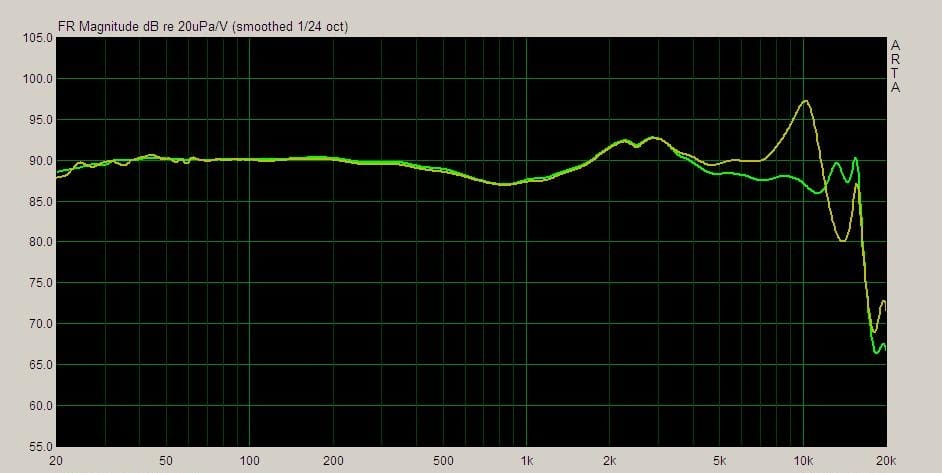
Why is the change so significant? The peak, which many people formerly believed to be a measurement artifact, is actually the half-wave resonance of the IEM. This peak shows itself as the speed of sound divided by 2*distance. Since we typically don’t know how deep our eardrum is, we usually have to work our way backwards. This is easiest to do with an IEM that measures with a big peak at around 8kHz, as that is the insertion depth that has become standard. The Reference, for example, is not an IEM I would recommend using for this exercise, as it does not have a noticeable peak when measured.
To find your own half-wave resonance, the easiest way to do this is to run a tone generator, such as the one in my squig.link. Scroll down to “EQ Demo” under the Equalizer tab and click “Tone Generator” and sweep between around 4-10kHz. The first big peak should be your own resonance peak.
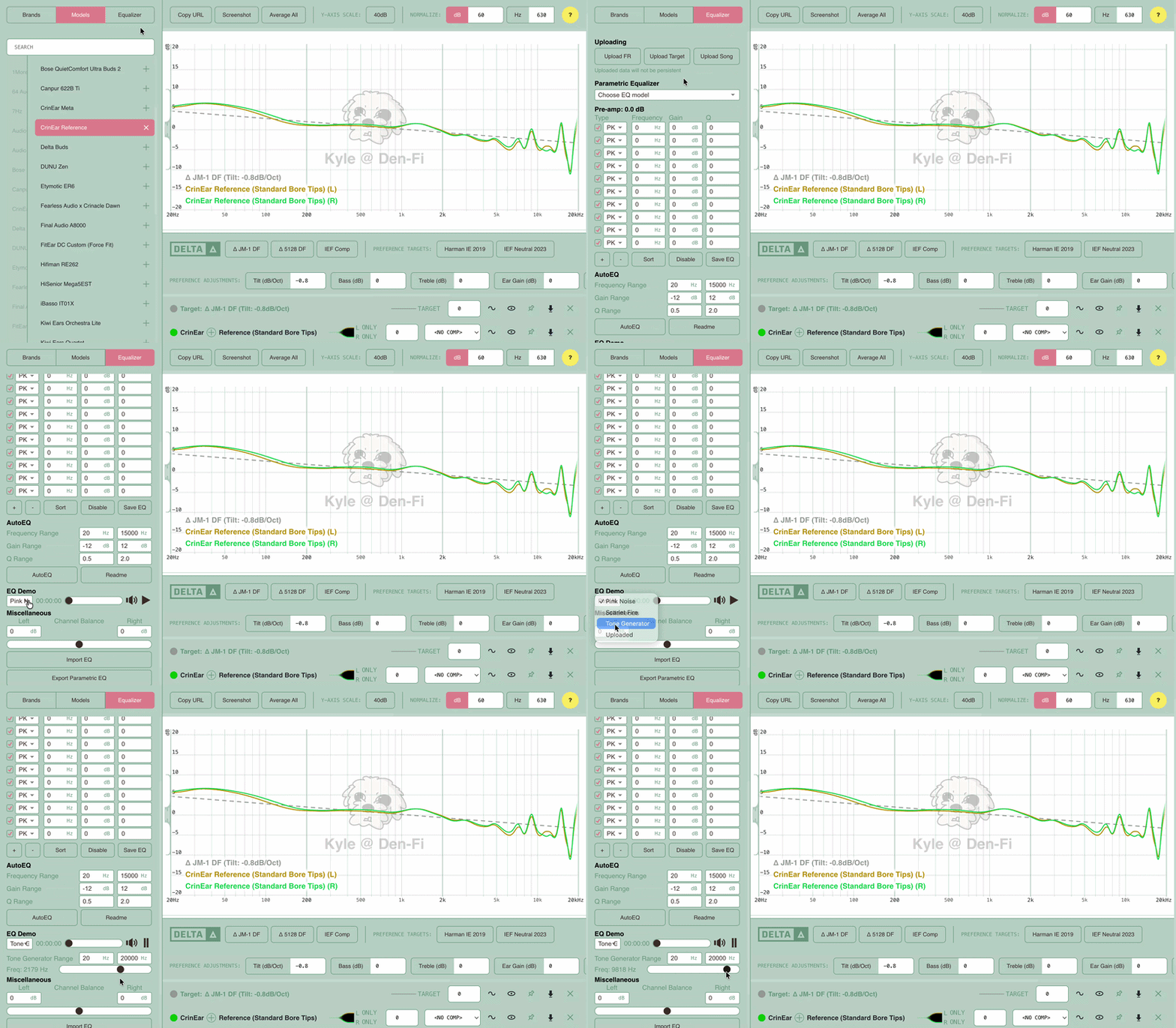
What you gain from this information is not just a rough guess of the length of your ear canal, but also a closer guess at how deviant your treble perception will be from most measurements. My treble peaks are usually around 5-6kHz, so my ear canals are fairly long and require a deeper-fitting IEM than my measurement rig allows. This makes achieving an insertion that bypasses the occlusion effect that much more difficult. It also means that most IEMs have a big dip between 6-9kHz. When paired with my sensitivity to treble above 10kHz, this is usually disastrous for me.
However, I am fortunate in that my ears are big enough to insert many IEMs fairly deeply. IEMs with longer nozzles have a better chance at sounding less like a roller coaster because I am closer to being on an equal playing field as those with shorter canals. With the right tip, I am able to insert past the second bend. This isn’t common; only a handful of IEMs actually work in this way for me. The Reference is one of them, so the treble actually is able to sound incredibly smooth to me. In contrast, the Prisma Lumen is not one of them, so I actually found the Lumen to be fairly unenjoyable because I heard both a large low treble dip and a relatively big mid treble boost. With this knowledge in mind…
Treble
This is the first IEM I have ever heard without a noticeable treble boost or treble dip. The fact that I am able to insert the Reference past my second bend is undoubtedly a big part of this smoothness. But, the Reference does measure without the elevated treble I’m so used to seeing with almost every other IEM, so I do believe the smoothness is a compounded effect. This smoothness does take some adjusting, as this level of treble control isn’t a kind of sound I’ve ever heard. After a brief adjustment, the Reference’s treble legitimately is some of the best I’ve heard in any transducer, period. Speakers are at the mercy of their rooms and I’ve yet to have the pleasure of hearing a room that was set up to this standard; no headphone I’ve heard at any price has more controlled and textured treble; and the only IEM whose presentation I may like more is the Subtonic STORM, which coincidentally is another IEM that I am able to insert past my second bend. The lack of major deviations in the treble are able to convey texture in air without the masking that much brighter IEMs do for me.
Midrange
Unlike treble, midrange is less immediately anatomically dependent, so competent tuning is much more important than getting lucky with anatomy. As the market has moved away from IEF 2020 and Harman targets, as explained in Listener’s video, I’ve found much more to like with the currently popular JM-1 target. I hate to say it, but I think the Reference has displaced the Sennheiser HD580 in midrange presentation for me. The only complaint I have is that with all of the stock tips, I got a little bit of lower midrange congestion. But with Sony EX11 tips or Divinius Velvets a size down from my typical tip size, this was able to clear up substantially. It’s still not perfect, but it’s close enough to ignore if I listen for long enough. Even with the congestion, Reference’s midrange is substantially less wrong-sounding than the vast majority of multi-kilobuck IEMs I’ve used like the Unique Melody Amber Pearl, 7th Acoustics Asteria, and Mysticraft Hex.
Bass
This is the region I believe will be most contentious. The market has gotten used to gigantic bass boosts as a result of trying to balance midrange and treble colorations, so going straight to the Reference may be a shock for more IEM-focused hobbyists. I, however, am primarily an apartment speaker listener, so I’m actually used to much less bass than the Reference outputs. My speakers that I tuned both with measurements and by ear (very) roughly measure to a corrected B&K curve, which may look familiar to the measurement obsessed:
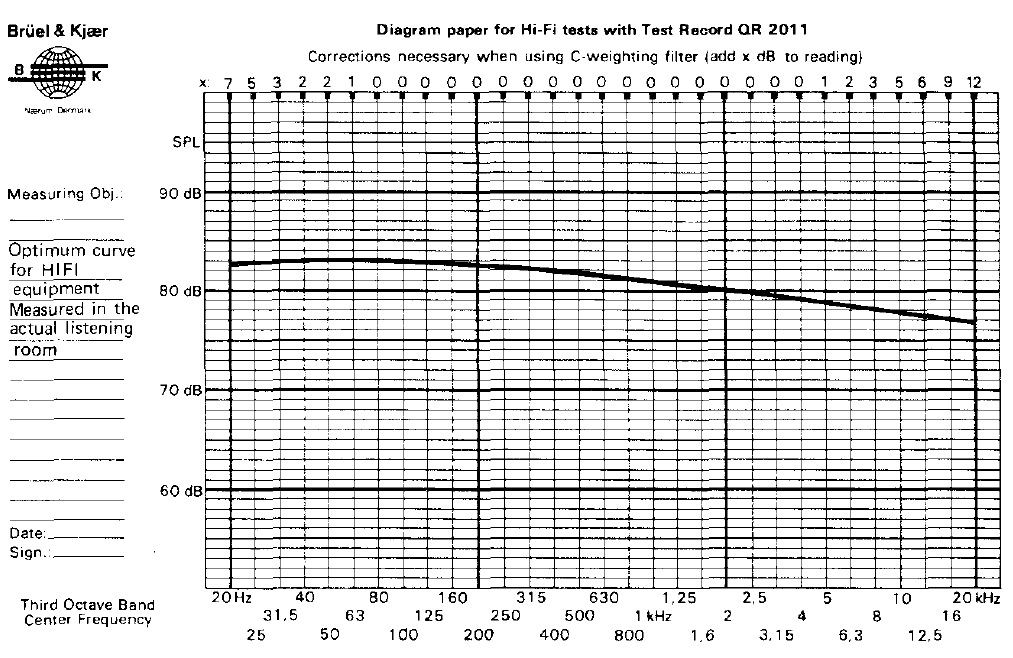
That’s right, it’s a downward slope like JM-1! Compared to what I’m used to, the Reference still has somewhat elevated bass:
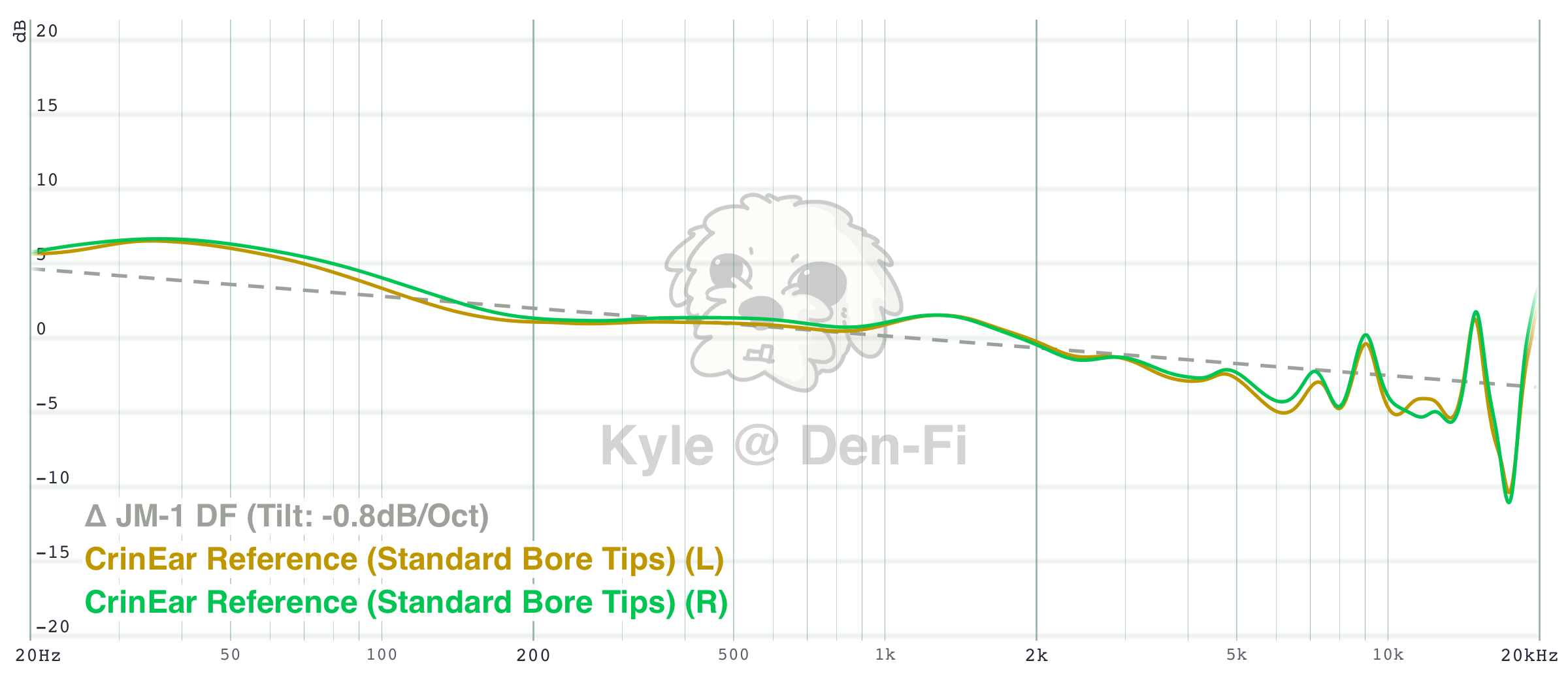
That’s not to say I don’t like elevated bass; one of my favorite IEMs is the Nightjar Acoustics Singularity which has much, much more bass. However, I think people should not go in expecting the Reference to be bass-light. I wouldn’t even consider it to be “bass-neutral.” If I were to change anything about the Reference’s tuning, I think it could actually do with a bit less bass to really nail the neutral sound signature and clean up that little bit of masking I hear. But I do know that change has to come slowly, and since the majority of the market is likely used to significantly elevated bass, the small bass hump is an amenable concession.
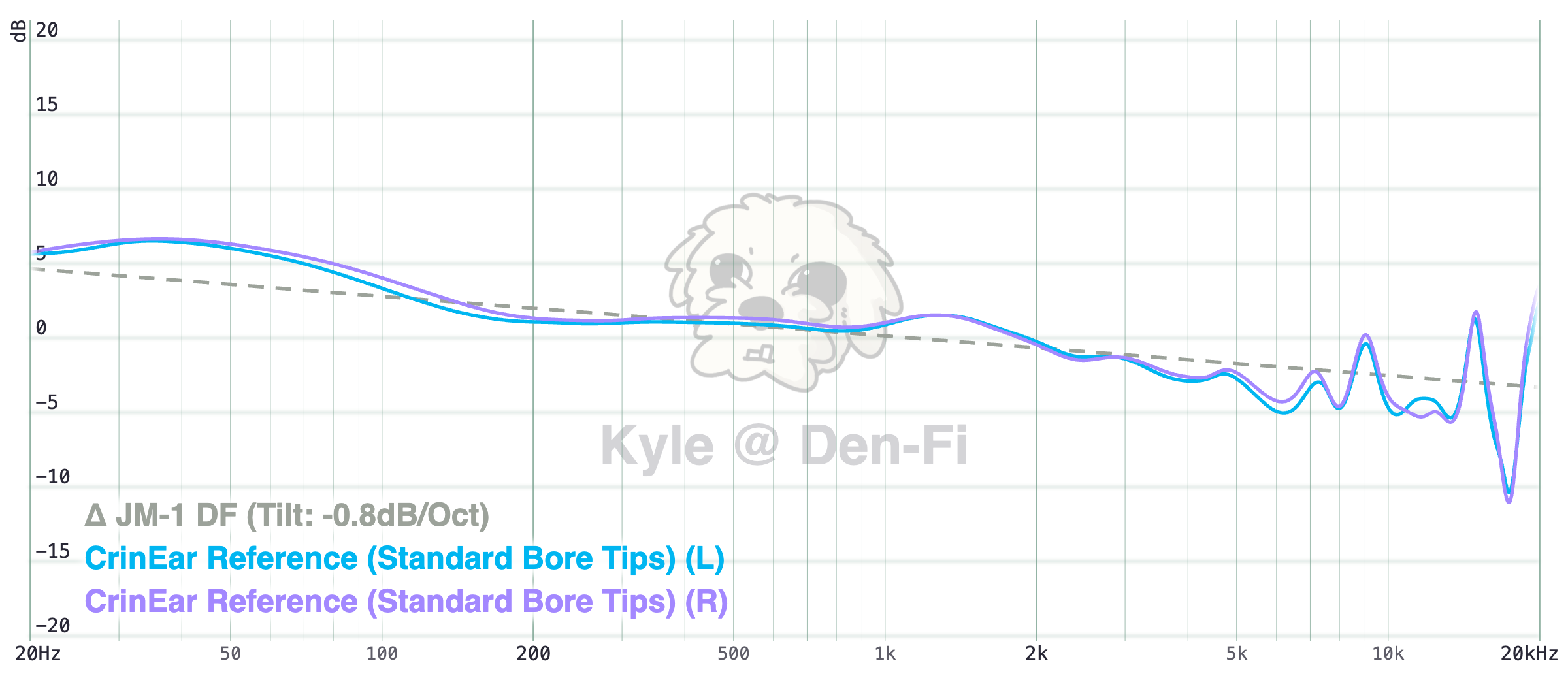
Measurements
I don't think there will be any surprises here as the way the Reference measures is its entire schtick, but I will of course include measurements.
I also have the ability to measure impedance, which is useful for seeing how a transducer will interact with a source with high output impedance like a tube amplifier.
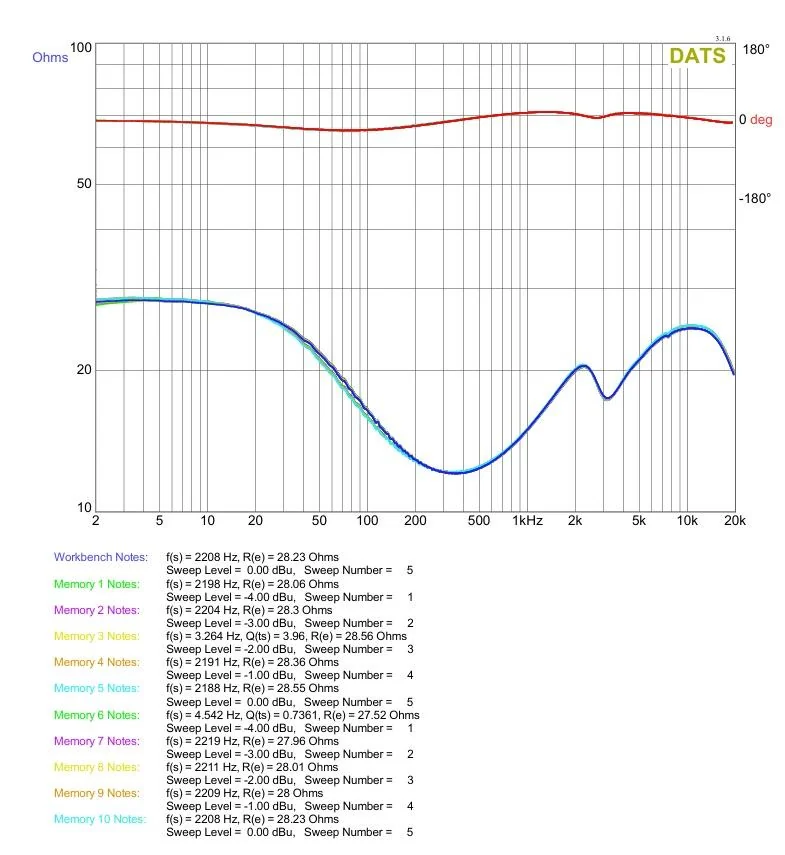
Since the Reference's impedance curve is not flat, it will be affected by higher output impedance. The higher impedance regions will have elevations with higher output impedance sources, which I was able to measure:
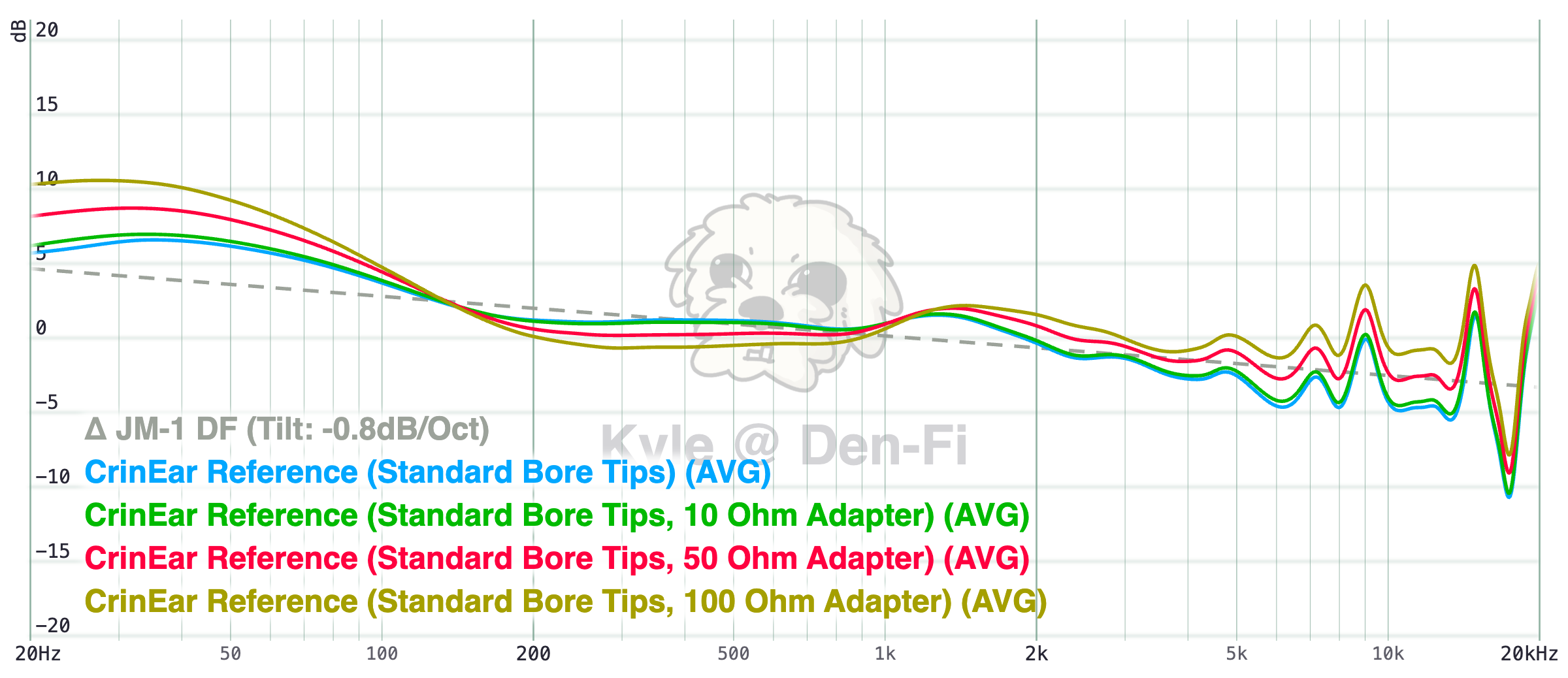
A 10 ohm output impedance shouldn't be particularly problematic, but higher than around 20 will make for a more V-shaped sound.
Source Scaling
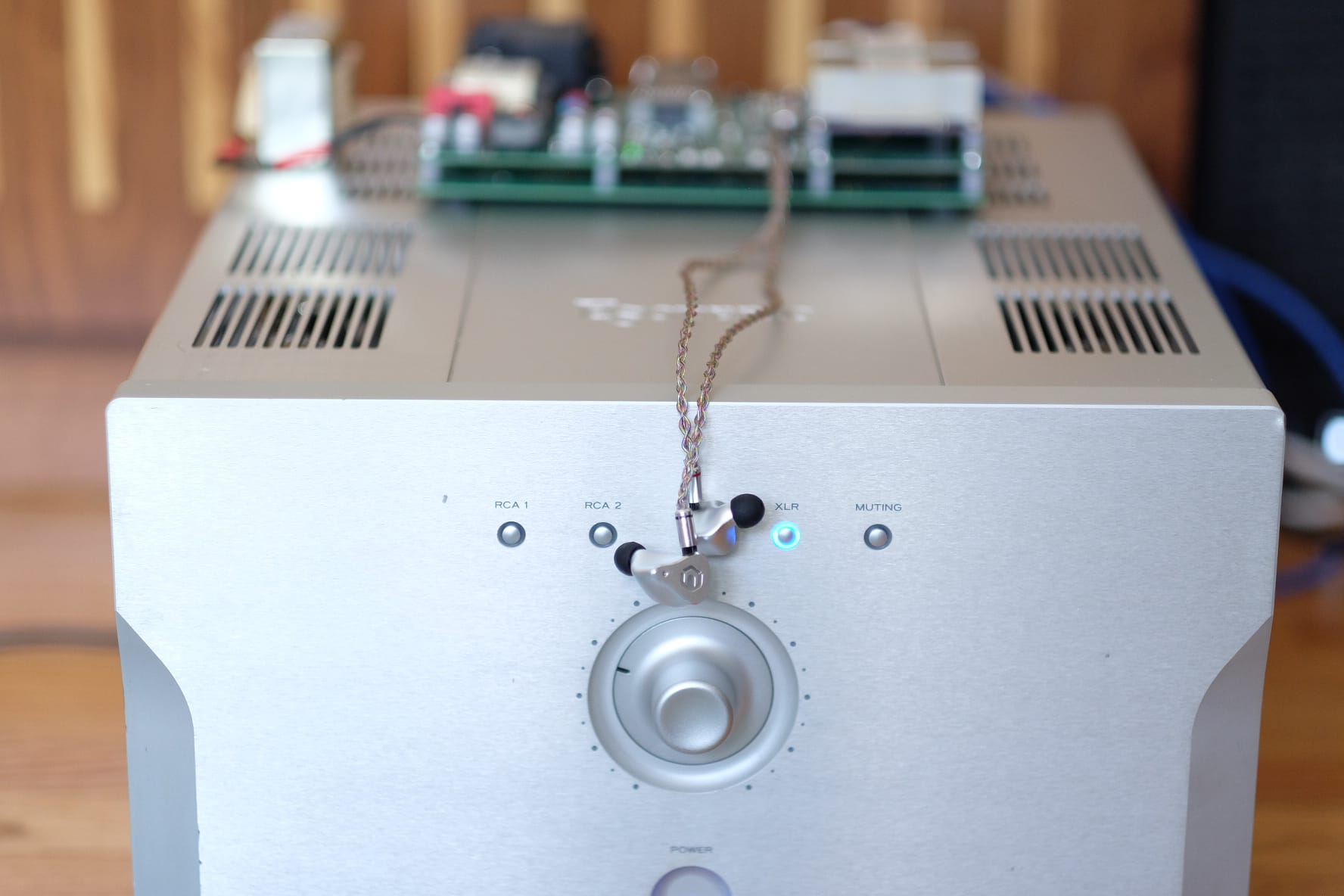
Just for fun, I tried plugging the Reference into my main headphone setup, which includes an Esoteric A100 push pull KT88 tube amplifier connected to Lundahl LL2774 transformers to drop the output impedance to ~4 ohms and register a more stable load for the amp. It’s a low enough output impedance that the effect it imparts on the frequency response is likely smaller than repositioning the Reference into my ear.
It, unfortunately, was a lot of fun. The murkiness I’m used to hearing with my Chord Mojo 2 and Hiby R6 Pro II wasn’t noticeable, despite my expectation being that the Reference would sound less clean. I don’t recommend this being the normal use for the Reference because it’s ridiculous to pair an IEM with a 90 pound speaker amp. But now that I’ve heard it, I have gone back and used the Reference over my over ear headphones with the A100. For people that say they hear source scaling, the Reference should impress.
The Crinology
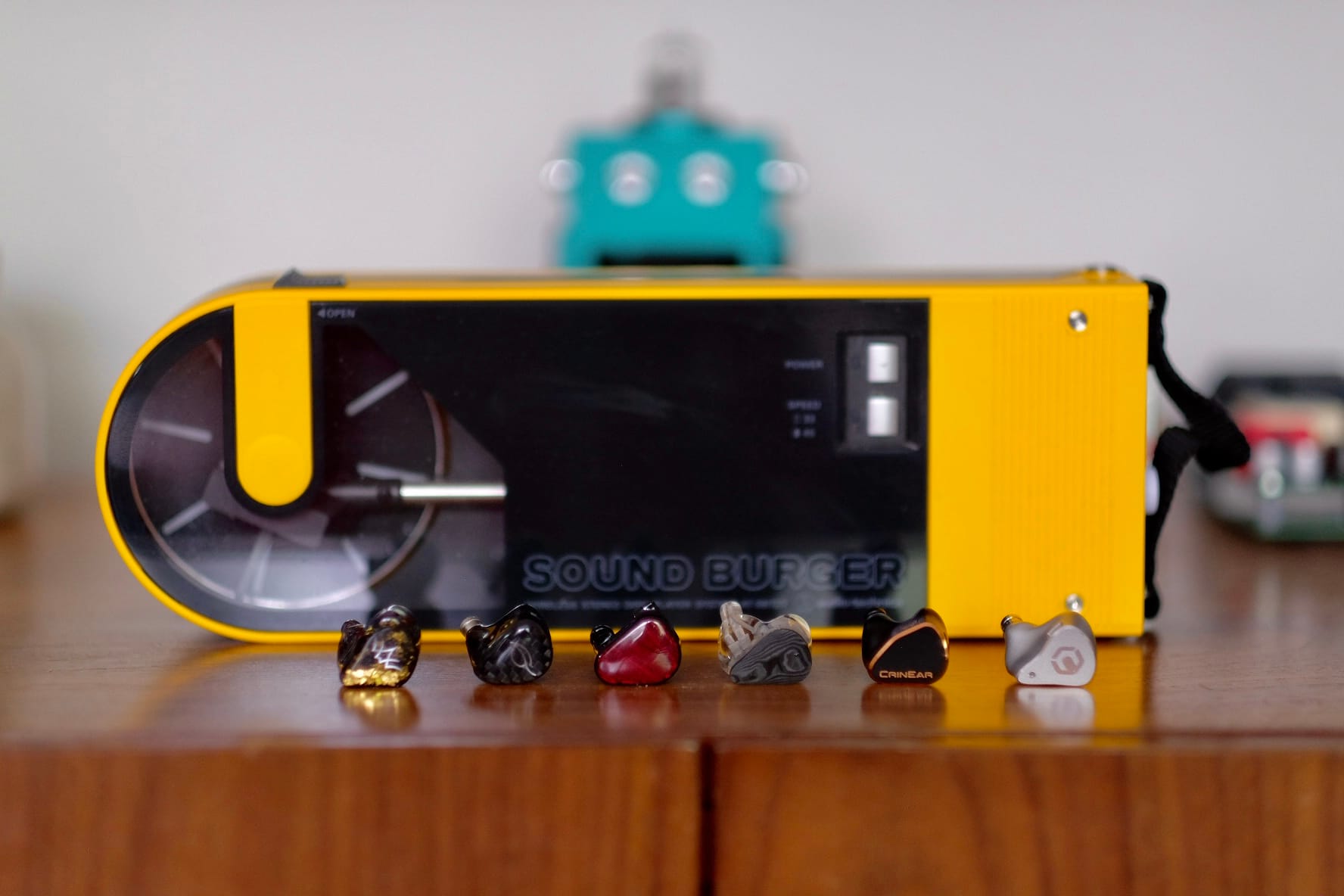
My friend Phil generously lent four key IEMs from Crinacle’s collaborative journey to the Reference. It would be very boring to read, “Too much bass and too much treble,” which is the case for most of these. But I’m going to do it anyway because I have seen at least a dozen misconceptions about what neutral means in just the past few days.
Fearless Audio x Crinacle Dawn
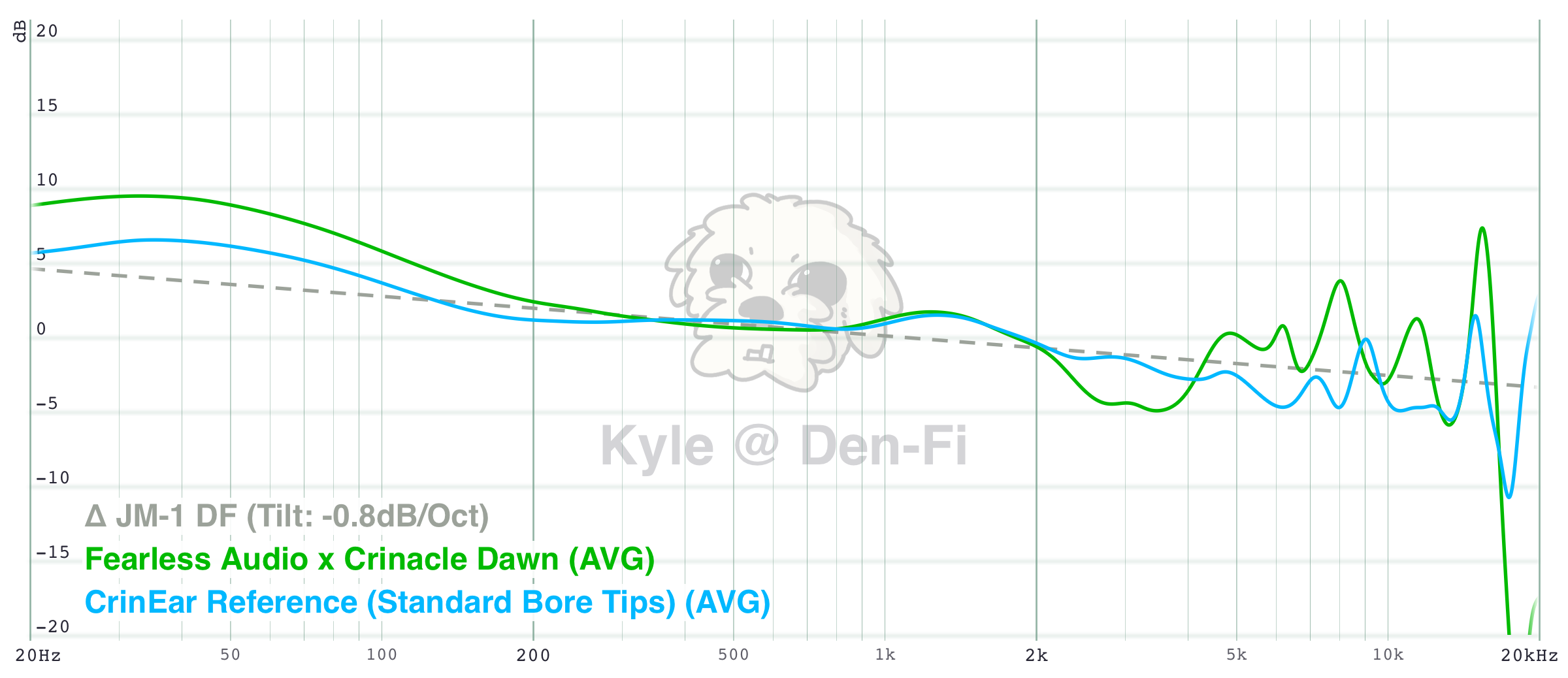
The Dawn was Crinacle’s first public collaboration back in 2020, and most expensive. I also think it’s the worst one.
The Dawn’s center midrange actually matches fairly closely to the Reference’s midrange but sounds comparatively V-shaped and way too bright at that. The Dawn is also one of the only times a sealed balanced armature driver IEM has given me the plugged up feeling in my ears.
SeeAudio x Crinacle Yume:Midnight
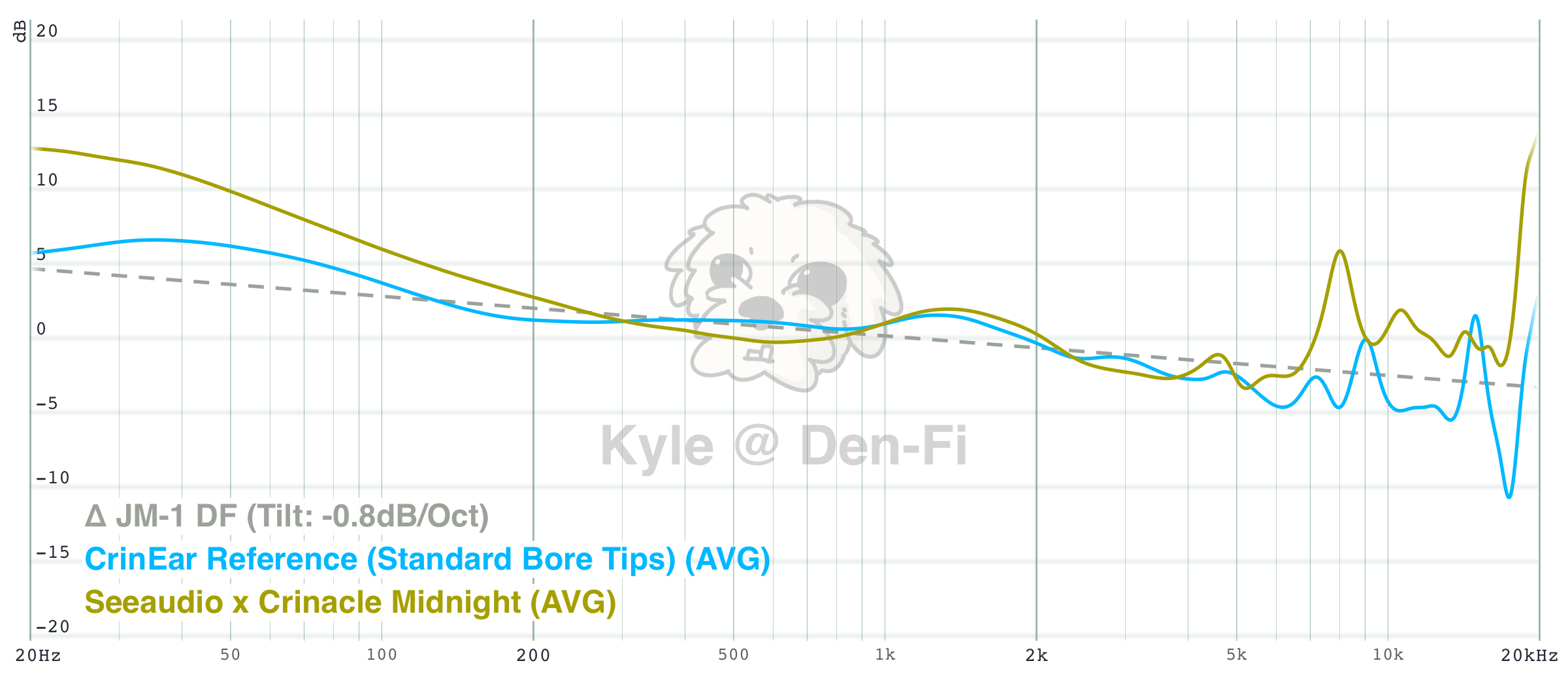
The Midnight was a significantly cheaper option released in 2022. It’s also my favorite of the four.
The Midnight is V-shaped like the Dawn but the treble elevation pattern happens to work for me better. The fit also works much better for me which does push the treble peaks upwards but keeps low treble balanced. The low midrange tuck is actually manifested as a much cleaner midrange to me than the Dawn. Compared to the Reference, that isn’t enough to shift my preference to the Midnight as it’s a little more V shaped than I’d like.
Truthear x Crinacle Red
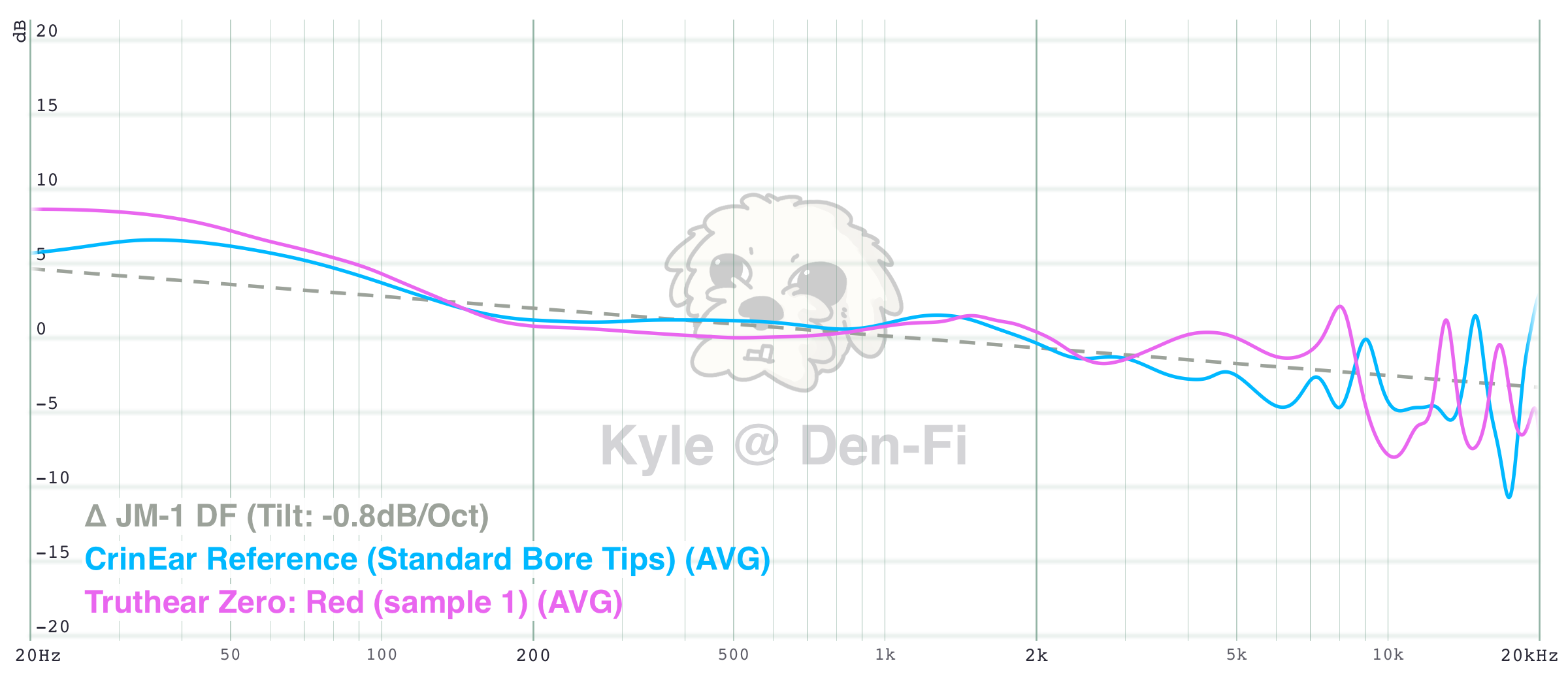
The Red is the most affordable Crinacle collaboration but unfortunately, even with my black hole ears, it just doesn’t fit me well. I probably would have dealt with this if I liked the sound, but I don’t.
The Red is arguably much more neutral than many modern IEMs because it doesn’t have a gigantic upper treble boost like many “new Meta” IEMs like the Thieaudio Hype series. I do think the non-tilted presentation in the low treble is fairly exciting but does sound weird more often than not.
Moondrop x Crinacle DUSK
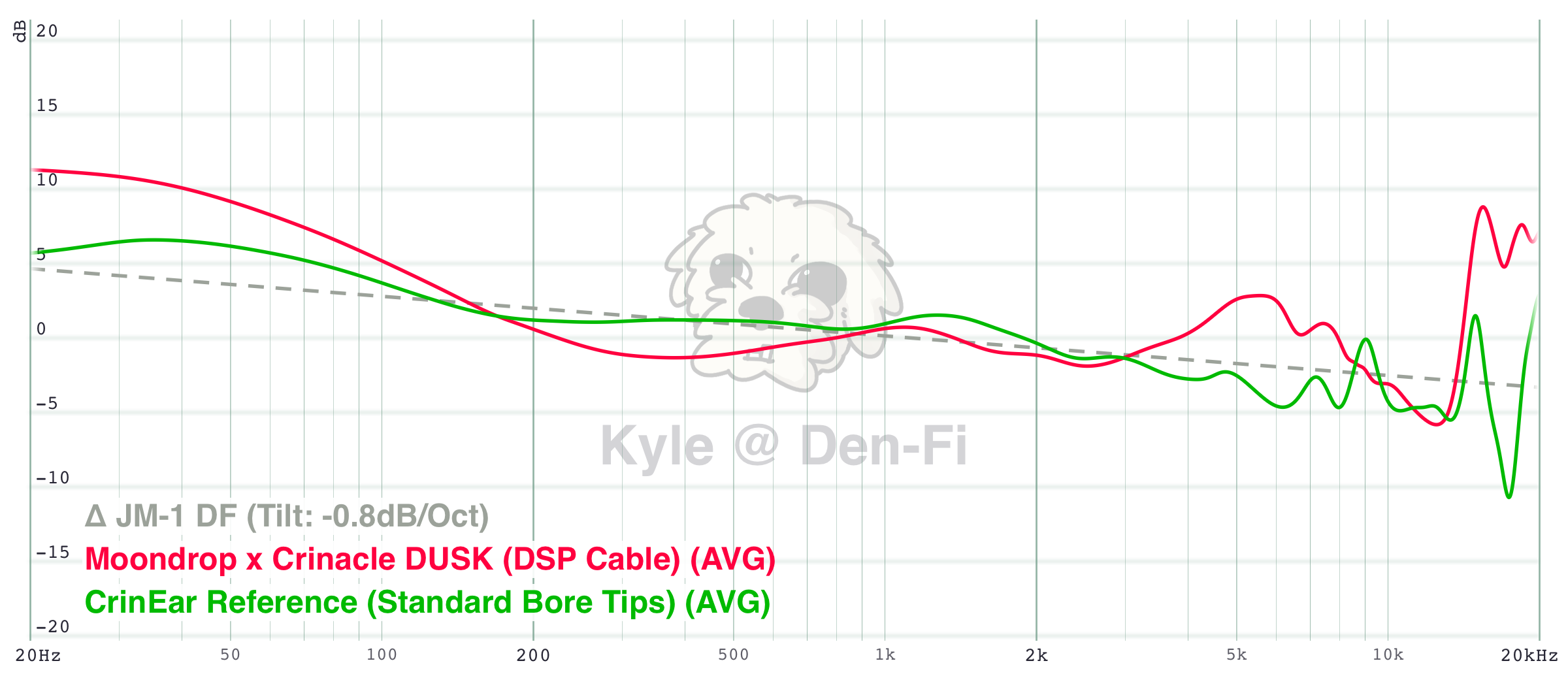
I don’t have a Blessing 2:Dusk which may be the biggest omission in this review—maybe the much maligned KZ CRN could also make an argument for that—but I do have the sequel. I remember liking this when I first heard it in 2023 but this one sounded panned in one direction. When I measured it, I found the reason that is not shown properly in my squig.link because of how it normalizes volume:
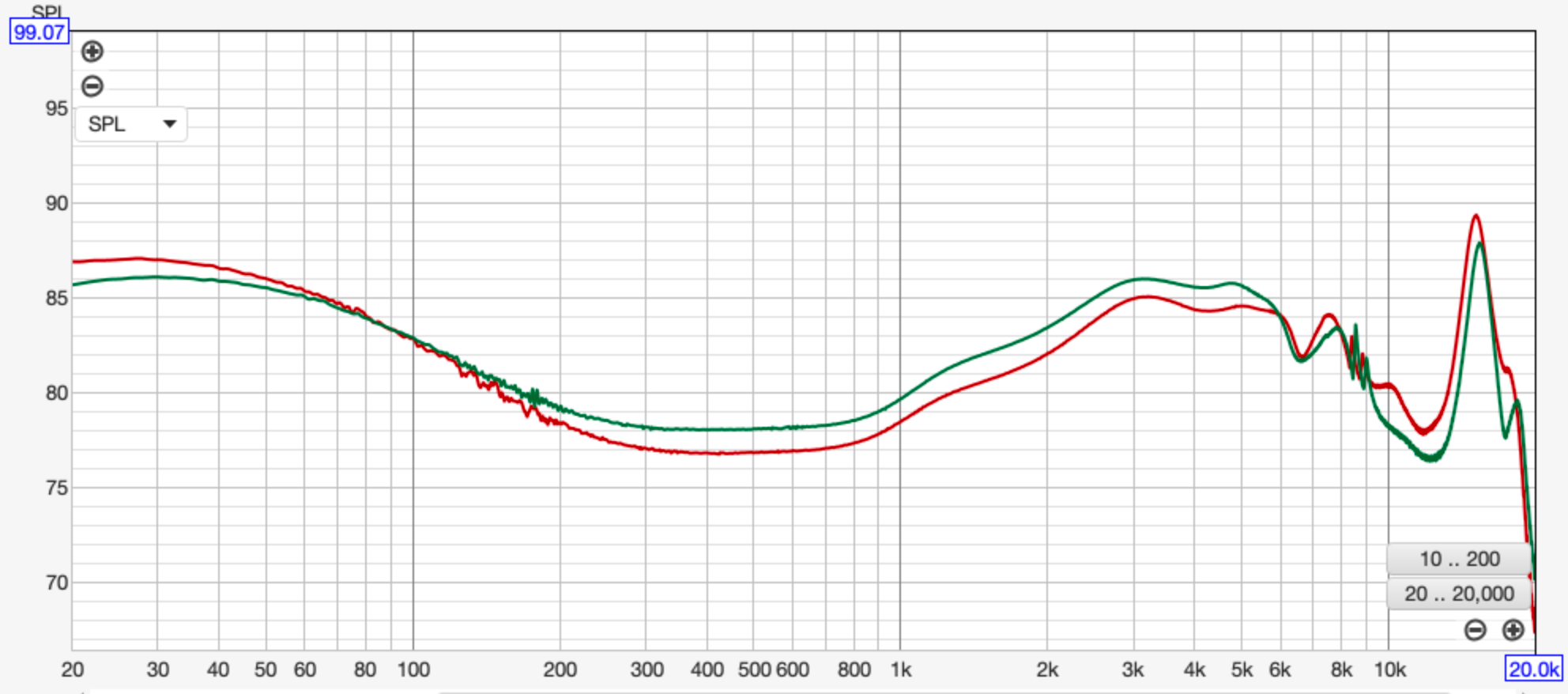
I have heard many stories about Moondrop’s QC so I guess I’m not that surprised but it was validating to actually confirm something was wrong with it. Regardless, too much bass and too much treble anyway.
CrinEar Meta
The Meta was the first IEM Crinacle independently released. It was meant to show off an IEM that was compliant to IEF2025, Crinacle’s updated target. I don’t like it because…
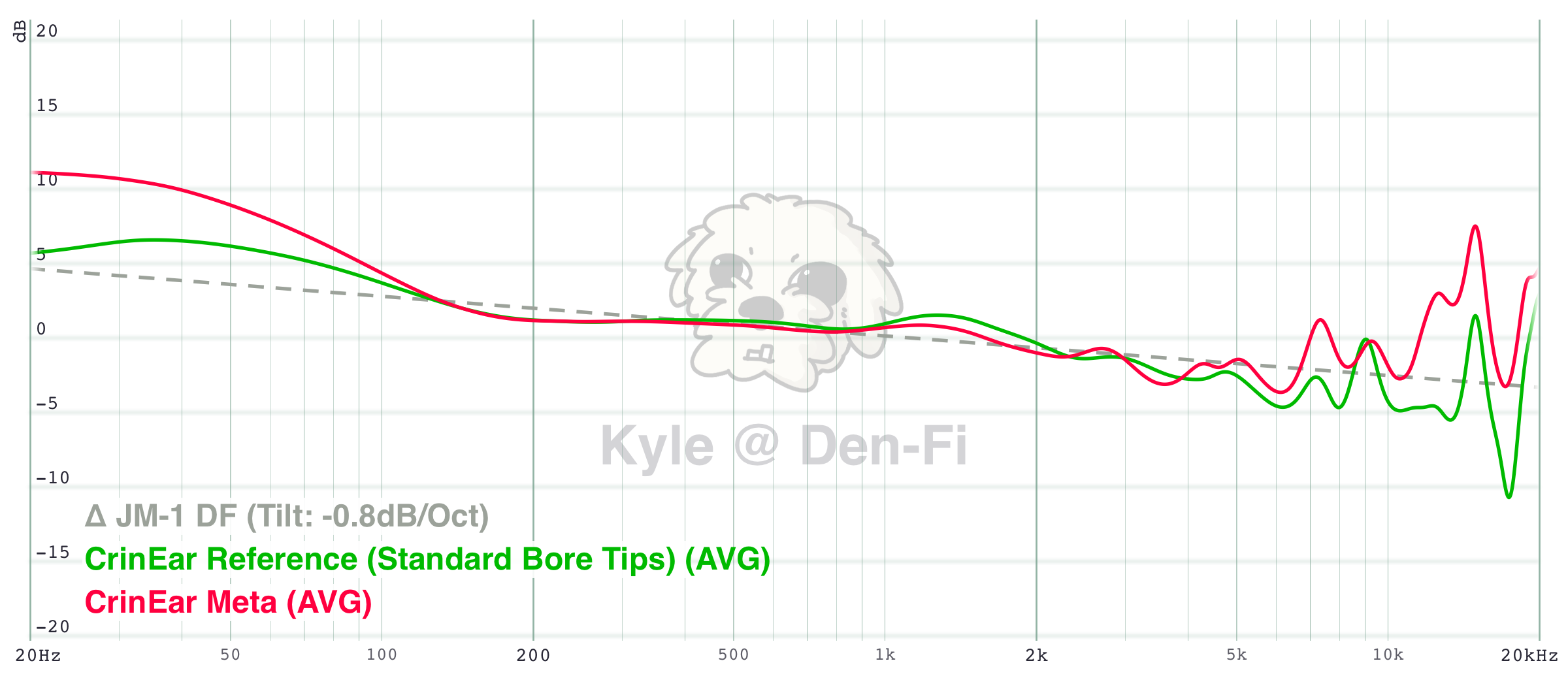
…too much bass and treble! In my ears, since it sits fairly shallowly in my ears, it’s very, very bright. The bass is fun but less textured than the Reference.
I wasn’t lying; it was boring and repetitive to write about how Crinacle’s other IEMs have too much bass and treble, and I’m sure it’s not fun to read. This is what makes the Reference stand out in the market though. There are plenty of IEMs with nice midranges; it seems like manufacturers have figured that out. The problem now is that the market has come to expect this elevated bass and treble. Manufacturers have combined this midrange with these colorations. This lopsided balance ends up creating a U or V-shaped tuning rather than something “neutral.” This trend of elevated bass and treble is something I’ve been complaining about for years.
This is what makes the Reference this so exciting: it‘s actually perceptually both balanced and neutral to me. I’ve cycled through at least one new car’s worth of IEMs over the years (like being an early adopter of the Campfire Audio Trifecta before it was known how…uniquely it was tuned) and without fail, unless the coloration happened to work for me like with my FitEar DC, I’d find their treble to ruin the entire IEM for me. The Kiwi Ears Orchestra Lite has mostly reasonable treble for me because it doesn’t really boost treble, but it did still make me wince at times.
I have never winced with the Reference.

Conclusion
The Reference rocks. I have seen many, many people claim they aren’t interested in the Reference because they believe it will be too clinical. It isn’t; it’s not like the Etymotic ER4 which is, frankly, not a pleasant experience for music due to its incredibly lean and midforward sound. The ER4 reminds me more of a Yamaha NS10 than a Genelec 8351. The Reference, instead, is one of the only transducers I’ve ever heard that doesn’t use party tricks to be compelling. Countless times in this hobby, I’ve wrinkled my nose when a song I’ve listened to countless times just sounds off because the transducer did something I couldn’t ignore. The Reference has yet to do this, even as the main transducer I’ve used for weeks.
To put it in different terms, the Reference, with my fit, is like putting salt and pepper on a Prime ribeye steak. It adds just enough flavor to augment the source material: the original cut of meat. There are plenty of people who prefer putting other condiments on a steak, and there are entire markets for different steak sauces. But it’s worth trying the less exciting steak to have a baseline for what that steak is like without everything else on top.
If that doesn’t sound appealing, that’s fine; every other IEM in the market has that extra flavor.